Description
What Are Conical Mixers?
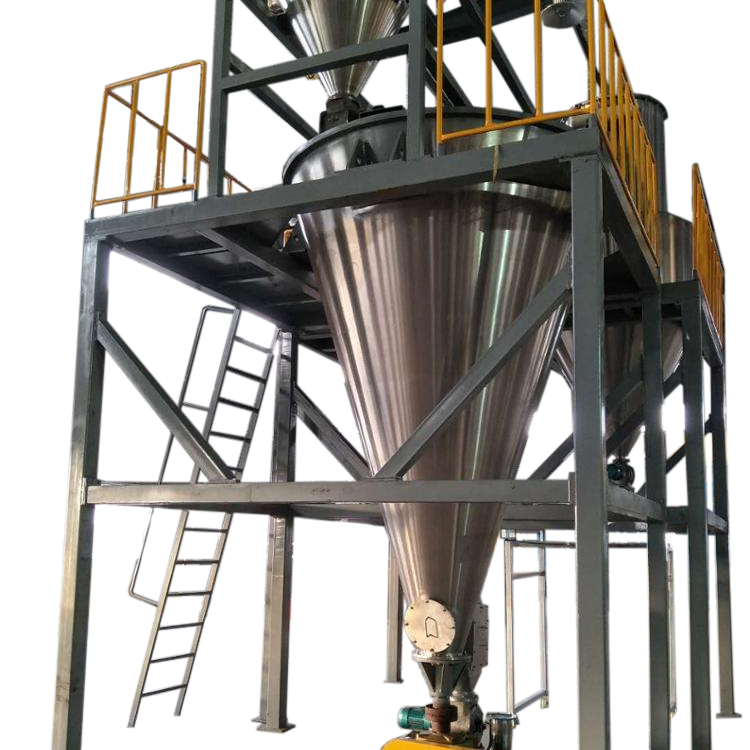
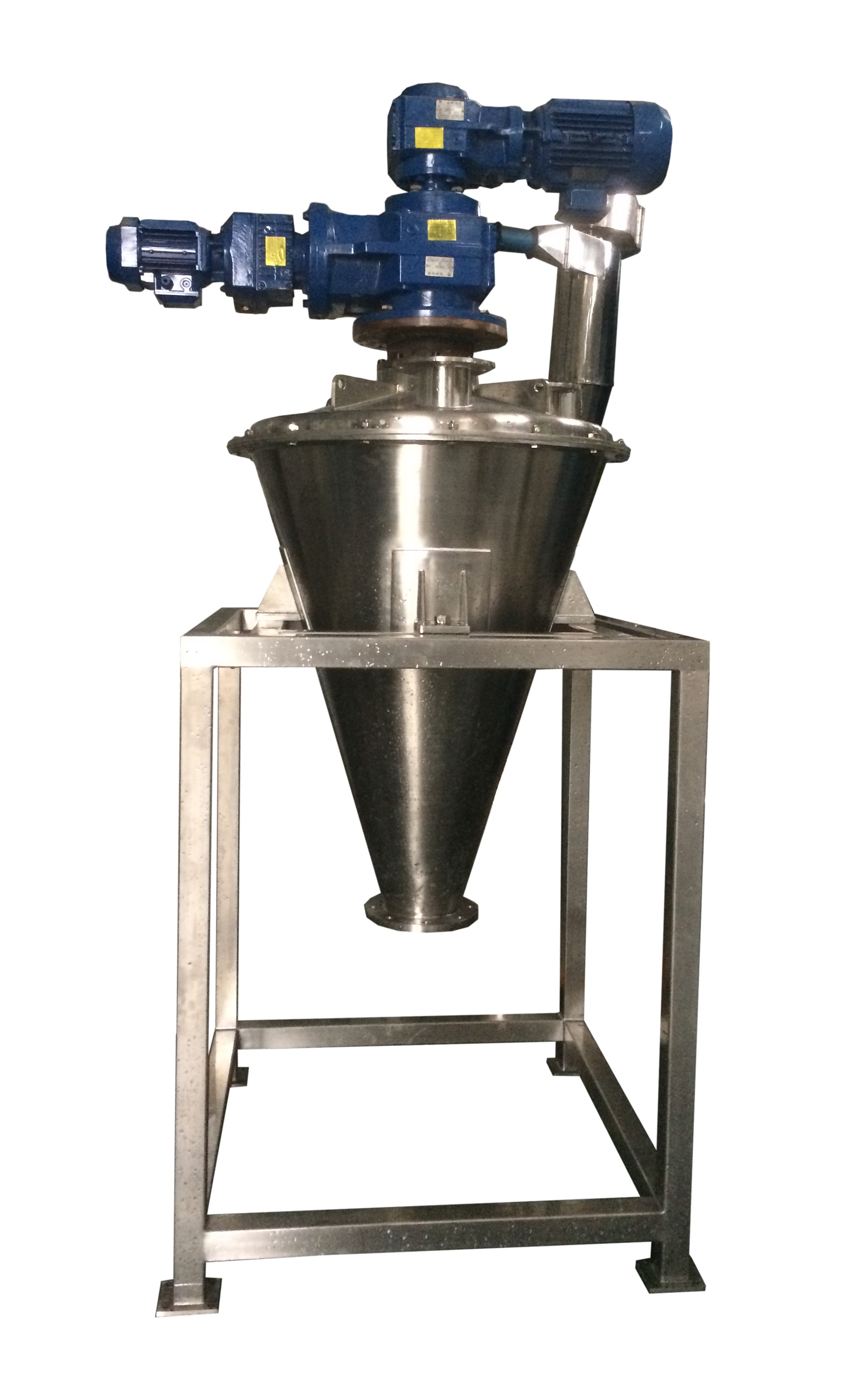
A Conical mixer is industrial blending machines with a distinct cone-shaped vessel. Because of this shape, materials move upwards along the walls and then down through the center. This unique movement promotes efficient and uniform mixing. Additionally, the vessel rotates while an internal agitator gently lifts and folds the materials.
As a result, the design reduces mixing time and ensures thorough blending of all particles. Moreover, conical mixers suit delicate, fragile, or heat-sensitive materials because they operate with low shear. Their shape also helps prevent dead zones where material can stagnate.
How Does a Conical Mixer Work?
Conical mixers operate by rotating the cone-shaped vessel around its vertical axis. Inside, an agitator or screw continuously lifts and folds the material. This dual action creates a homogeneous mixture with minimal energy use.
Furthermore, the conical shape naturally encourages circulation by moving materials from the bottom to the top and back down through the center. This cycle repeats until the desired mix uniformity is achieved. Operators can control the mixing speed and duration to optimize the process for various product types.
In addition, the gentle action reduces dust generation and prevents overheating, which is important for heat-sensitive products. These mixers effectively handle powders, granules, pastes, and even liquid-solid mixtures.
Design Features of Conical Mixer
The conical vessel often includes a discharge valve at the narrow bottom. This design enables quick and complete emptying, reducing product loss. Many models feature smooth, polished internal surfaces, facilitating cleaning and meeting sanitary standards.
Conical mixers come in various sizes, ranging from small lab units to large industrial machines. Manufacturers typically use stainless steel to provide durability and corrosion resistance. Some mixers offer jacketed vessels for temperature control, allowing heating or cooling during mixing.
Moreover, adjustable speed drives let operators set the ideal rotation rate for different materials. The agitator design can vary but usually includes screws or paddles that gently lift materials to avoid damage.
Applications of Conical Mixer
Conical mixer serves many industries. For example, in pharmaceuticals, they blend powders for tablets, capsules, and granules without damaging sensitive ingredients. The gentle action preserves the integrity of active compounds.
Similarly, the food industry uses conical mixers to blend spices, flour, and other dry ingredients uniformly. They also mix pastes and doughs while maintaining product texture. Additionally, these mixers reduce dust, improving factory safety and hygiene.
Chemical manufacturers rely on conical mixers to blend powders, crystals, and pastes under controlled conditions. These mixers handle abrasive or corrosive materials when made from suitable construction materials. Furthermore, the food and cosmetic industries benefit from sanitary designs that comply with strict hygiene regulations.
Benefits of Using Conical Mixer
Conical mixers offer excellent blending efficiency while consuming minimal energy. Their low shear design protects delicate materials from breakage or heat damage. Besides, the mixing pattern eliminates dead spots, ensuring consistent quality.
The tapered discharge helps prevent material buildup and simplifies cleaning. Many models support clean-in-place (CIP) systems, which reduce downtime. Operators can also adjust mixing parameters easily to meet product needs.
Moreover, conical mixers reduce dust generation and airborne particles, enhancing operator safety and lowering contamination risks. They ensure batch consistency, which is critical in regulated industries like pharmaceuticals and food.
Maintenance and Cleaning
Maintaining conical mixers requires regular inspection of seals, bearings, and agitators. Operators should lubricate moving parts to ensure smooth operation. The smooth interior surfaces simplify cleaning, while CIP systems automate sanitation.
It is important to inspect discharge valves and seals regularly to prevent leaks. Periodic checks of motor drives and controls help keep the mixer running efficiently. Proper cleaning also prevents cross-contamination and extends the equipment’s lifespan.
Conclusion
Conical mixers provide a reliable, gentle, and efficient mixing solution across many industries. Their unique shape and mixing action enable uniform blending of powders, granules, and pastes. Additionally, the design supports sanitary operation, easy discharge, and minimal product loss.
With adjustable controls and robust construction, conical mixers meet the demands of pharmaceuticals, food, chemical, and cosmetics manufacturing. They protect product quality by minimizing shear and heat generation. Overall, conical mixers remain a preferred choice for precise, low-shear mixing applications.
Also Check out, “Certifications And Standards“
Specifications
Specifications for Conical Mixers
Mixing Capacity
Conical mixers are available in a wide range of capacities, typically from 10 liters up to several thousand liters. The size depends on the application and production scale.
Vessel Material
Most conical mixers feature vessels made of stainless steel (usually 304 or 316 grade) for corrosion resistance and easy cleaning. Specialized alloys or coatings are available for handling aggressive chemicals.
Mixer Shape
The vessel has a conical (tapered) shape designed to facilitate efficient mixing and complete discharge of materials.
Mixing Mechanism
The mixer uses a rotating conical vessel combined with an internal agitator (screw or paddle) to lift and fold materials gently.
Rotation Speed
Typical rotation speeds range from 5 to 50 revolutions per minute (RPM), adjustable to optimize mixing based on material properties.
Agitator Type
Agitators can be screw-type, paddles, or combinations designed for low shear mixing to prevent particle breakage.
Drive System
Mixers use electric motors with variable frequency drives (VFD) or adjustable speed controls to fine-tune operation.
Discharge System
A bottom discharge valve or butterfly valve enables easy and complete emptying of mixed materials.
Temperature Control
Some conical mixers include jacketed vessels for heating or cooling, allowing temperature regulation during mixing.
Surface Finish
Internal surfaces often have a polished finish (Ra 0.4 to 0.8 microns) to enhance cleanability and prevent material sticking.
Sealing
Mechanical seals or hygienic seals prevent contamination and leakage during operation.
Cleaning
Many models support clean-in-place (CIP) or manual cleaning for quick changeovers and sanitation.
Compliance
Conical mixers can be built to meet industry standards such as FDA, GMP, 3A sanitary standards, or ATEX for hazardous environments.
Control Panel
Operators control mixing parameters through digital or analog interfaces, including timers, speed controls, and safety interlocks.
Power Supply
Electric power requirements vary, commonly 220V to 480V, three-phase, depending on motor size and configuration.
Noise Level
Designed to operate with low noise, typically under 75 decibels, ensuring a safer working environment.
Dimensions and Weight
Dimensions vary by capacity; smaller mixers are compact and portable, while large industrial units may require dedicated space and structural support.
Installation Procedures
Preparing the Installation Site
Choose a stable, level surface with enough space for the mixer and operator access. Ensure proper lighting and ventilation.
Unpacking and Inspection
Carefully unpack the mixer. Inspect all parts for damage or missing components before starting installation.
Positioning the Mixer
Place the mixer on the prepared surface. Align it to allow easy connection to power and material feed systems.
Securing the Mixer
Bolt the mixer securely to the floor or foundation to prevent movement during operation. Use appropriate anchors.
Connecting the Power Supply
Connect the mixer to the correct power source. Verify voltage and phase match the mixer’s requirements.
Installing Material Feed System
Attach the inlet feed system firmly. Ensure seals are tight to prevent leakage or contamination.
Setting Up the Discharge System
Connect the discharge outlet to the collection system. Verify that valves and piping are properly sealed.
Calibrating the Mixer Controls
Power on the mixer and check control panel functions. Adjust speed and timing settings according to the process needs.
Performing Initial Test Run
Run the mixer empty to check for unusual noises or vibrations. Make adjustments as necessary before loading materials.
Ensuring Safety Measures
Install safety guards and emergency stops. Train operators on proper use and emergency procedures.
Final Checks
Double-check all connections and fasteners. Confirm that the mixer operates smoothly and safely before regular use.
Maintenance Procedures
Regular Cleaning
Clean the mixer after every use to prevent material buildup. Use appropriate cleaning agents that do not damage surfaces.
Inspecting Seals and Gaskets
Check seals and gaskets regularly for wear or leaks. Replace any damaged parts immediately to maintain airtight operation.
Lubricating Moving Parts
Apply lubricant to bearings and other moving parts according to the manufacturer’s schedule. Use the recommended lubricants only.
Checking Motor and Drive Components
Inspect the motor and drive belts for signs of wear or damage. Tighten or replace belts as needed to ensure smooth operation.
Monitoring Electrical Connections
Examine electrical wiring and connections regularly. Look for loose wires, corrosion, or damage and repair promptly.
Verifying Control Panel Functionality
Test all control panel buttons and switches periodically. Ensure that emergency stops and safety features function correctly.
Inspecting Structural Integrity
Look for cracks, corrosion, or deformation in the mixer frame and components. Address any issues immediately to avoid accidents.
Testing Mixer Performance
Run the mixer with a test load to check for unusual noises, vibrations, or performance drops. Investigate and resolve issues quickly.
Scheduling Professional Servicing
Arrange for professional inspection and servicing annually or as recommended by the manufacturer to maintain optimal performance.
Documenting Maintenance Activities
Keep a detailed log of all maintenance activities, repairs, and parts replacements. Use this to track the mixer’s condition over time.
Q&A
What is a conical mixer used for?
A conical mixer is used to blend powders, granules, and pastes uniformly, especially when gentle mixing is needed.
How does a conical mixer work?
It rotates a conical vessel to create a tumbling action that mixes materials evenly without damaging them.
What industries commonly use conical mixers?
Pharmaceutical, food processing, chemical, and cosmetic industries frequently use conical mixers for blending sensitive materials.
Can conical mixers handle liquids?
Yes, they can mix viscous liquids and pastes in addition to dry powders.
What are the advantages of a conical mixer?
Conical mixers provide gentle mixing, uniform blending, easy discharge, and efficient cleaning.
Are conical mixers easy to clean?
Yes, their design allows easy access for cleaning, often supporting CIP (clean-in-place) systems.
What materials are conical mixers made from?
Typically, they are constructed from stainless steel for durability and corrosion resistance.
How do I maintain a conical mixer?
Regularly check seals, lubricate moving parts, clean thoroughly, and inspect the motor and controls.
Is it possible to scale up mixing with conical mixers?
Yes, conical mixers come in various sizes and can handle both small and large batch mixing.
Are conical mixers energy efficient?
Generally, yes, because their mixing action requires less power compared to high-shear mixers.
What safety features are important in conical mixers?
Emergency stop buttons, proper guarding, and sealed electrical components are essential for safe operation.
Can conical mixers be automated?
Yes, many models integrate with control systems for automated operation and monitoring.
Advantages / Disadvantages
Advantages of Conical Mixers
Conical mixers provide gentle and uniform mixing, preserving the integrity of delicate materials. They handle a wide range of materials, including powders, granules, and viscous pastes. Their design allows for easy discharge of mixed products, minimizing material loss. These mixers are easy to clean, often compatible with clean-in-place (CIP) systems, which reduce downtime. They require relatively low energy consumption compared to other mixing technologies. Conical mixers offer excellent scalability, suitable for both small and large batch sizes. Their stainless steel construction ensures durability and corrosion resistance in demanding environments. Additionally, they reduce the risk of overheating sensitive materials during mixing.
Disadvantages of Conical Mixers
Conical mixers generally have longer mixing cycles than high-shear or rapid mixers, which may affect throughput. They may not be ideal for processes requiring intense shear or fast dispersion. The initial cost of a conical mixer can be higher compared to simpler mixing equipment. Due to their shape, conical mixers require more floor space relative to their capacity. They may need specialized maintenance, especially for seals and bearings exposed to abrasive materials. Mixing highly abrasive or sticky materials can cause wear or clogging issues. Finally, conical mixers are less suitable for continuous mixing processes, as they primarily operate in batch mode.
Applications
Applications of Conical Mixers
Conical mixers are widely used in the pharmaceutical industry for blending powders and granules with precision. They ensure uniform mixing of active ingredients and excipients, which is essential for tablet and capsule production. In the food industry, conical mixers handle ingredients like spices, flours, and doughs, preserving texture and preventing overheating. These mixers also suit the production of pastes, sauces, and other viscous food products.
The chemical industry uses conical mixers to blend powders, crystals, and pastes, especially when gentle mixing is required. They are ideal for producing adhesives, resins, and specialty chemicals where material integrity matters. Cosmetics manufacturers rely on conical mixers to combine powders, creams, and gels, ensuring smooth, consistent products.
Conical mixers play a key role in the production of fertilizers and agricultural chemicals by evenly mixing granular materials. They are also used in the plastics industry to blend powders and additives before molding or extrusion. Research and development labs benefit from the precise, small-batch mixing capability of conical mixers for product formulation and testing.
Their versatility and gentle mixing action make conical mixers suitable for many industries requiring consistent, contamination-free blending of diverse materials.