
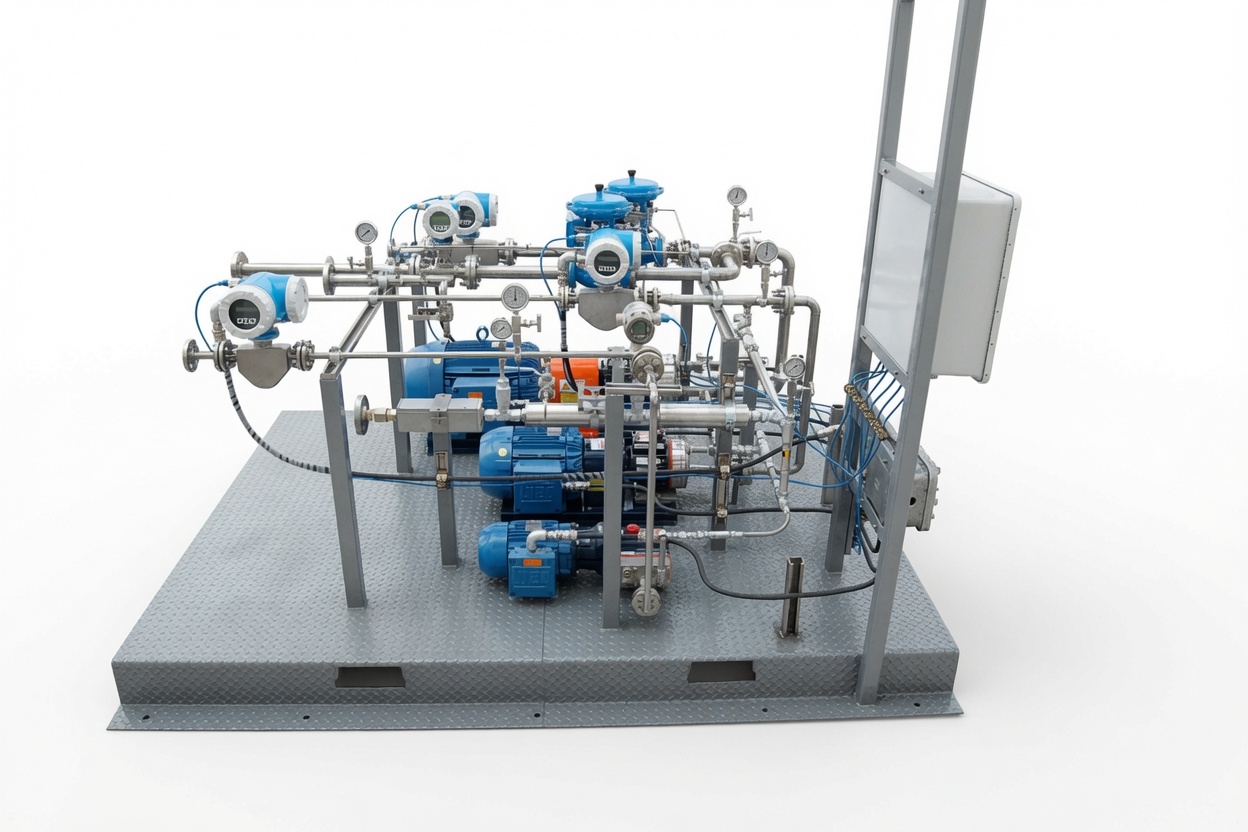
Description
Cavitation Systems
Harnessing the Power of Bubble Dynamics in Modern Engineering & Industry
What is Cavitation?
Cavitation is a fascinating physical phenomenon that occurs when the local pressure in a liquid drop below its vapor pressure, leading to the rapid formation of vapor-filled cavities (bubbles). These bubbles grow and then collapse violently when they encounter higher pressure regions, releasing enormous, localized energy in the form of shock waves, microjets, high temperatures (up to 5000 K), and pressures (up to 1000 atm).
Types of Cavitation Systems
Ultrasonic (Acoustic) Cavitation
Generated by high-frequency sound waves (typically 20–100 kHz). Bubbles oscillate and collapse due to pressure fluctuations from ultrasonic fields. Ideal for precise, small-scale applications.
- Stable & Transient bubbles
- Excellent for emulsification & cell disruption
Hydrodynamic Cavitation
Created by velocity changes in flowing liquids (Venturi effect, orifices, rotors). More scalable and energy-efficient for continuous industrial processes.
- Orifice plates, Venturi reactors, rotor-stator systems
- High throughput & low operating cost
How Cavitation Systems Operate
- 1
Nucleation: Pressure drops below vapor pressure → microscopic gas/vapor bubbles form. - 2
Growth: Bubbles expand rapidly in low-pressure zones. - 3
Collapse: Sudden pressure recovery causes implosion → extreme energy release.
Industrial & Scientific Applications
♻️
Water Treatment & Disinfection
Generates hydroxyl radicals (•OH) for advanced oxidation processes (AOPs). Destroys pollutants, bacteria, and pharmaceuticals in wastewater.
🧪
Chemical Processing
Intensifies reactions through better mixing, emulsification, and mass transfer. Used in biodiesel production, extraction, and nanoparticle synthesis.
🏭
Food & Pharma
Homogenization of milk, juices, and creams. Cell disruption for bioactive compound extraction. Non-thermal pasteurization.
⚕️
Medical Applications
Ultrasonic cavitation for fat reduction (body contouring), lithotripsy (kidney stones), and targeted drug delivery.
✅ Advantages
- Green technology — minimal chemicals required
- Energy efficient compared to traditional mixing
- Scalable from lab to industrial levels
- Enhanced mass transfer & reaction rates
⚠️ Challenges & Mitigation
- Uncontrolled cavitation causes erosion in pumps & turbines
- Noise & vibration management required
- Optimized reactor design critical for performance
The Future of Cavitation Technology
From preventing damage in hydraulic systems to revolutionizing sustainable manufacturing and environmental remediation, cavitation systems represent a powerful, versatile tool in modern engineering. Ongoing advancements in reactor design and hybrid technologies continue to unlock new possibilities.
Reviews
There are no reviews yet.